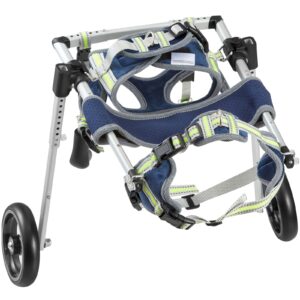
Dog wheelchair
Dog Wheelchair: Giving Mobility and Freedom Back to Your Pet
When a dog loses its ability to walk—whether due to age, injury, or disease—it can be heartbreaking to watch. But thanks to modern pet mobility aids, a dog wheelchair can give your furry friend a new lease on life. These specially designed devices help dogs regain independence, improve their quality of life, and stay active despite physical limitations.
What Is a Dog Wheelchair?
A dog wheelchair (also known as a dog cart or dog mobility aid) is a supportive frame on wheels designed to assist dogs who have difficulty using their hind legs—or, in some cases, all four legs. It supports the dog’s body weight while allowing natural movement of the front legs, enabling the animal to walk, run, and play again.
Wheelchairs are available in different designs and sizes to accommodate breeds from tiny Chihuahuas to large Great Danes.
When Does a Dog Need a Wheelchair?
A veterinarian may recommend a dog wheelchair for conditions such as:
-
Arthritis or hip dysplasia
-
Spinal injuries or intervertebral disc disease (IVDD)
-
Degenerative myelopathy (DM)
-
Amputation or congenital limb deformities
-
Paralysis or partial limb weakness due to trauma or nerve damage
If your dog is struggling to stand, drag its hind legs, or tire easily, a mobility aid could help improve daily function and comfort.
Types of Dog Wheelchairs
-
Rear-support wheelchairs – The most common type, designed for dogs with weak or paralyzed hind legs.
-
Full-support (quad) wheelchairs – For dogs needing assistance with all four legs or balance issues.
-
Front-support wheelchairs – For dogs whose front legs are affected by injury or disease.
Choosing the right type depends on your dog’s specific mobility challenges.
Benefits of Using a Dog Wheelchair
-
Restores independence – Dogs can walk, run, and play again.
-
Prevents further injury – Reduces strain on healthy limbs.
-
Improves mental health – Active dogs tend to be happier and less anxious.
-
Supports rehabilitation – Can be used as part of physical therapy.
-
Enhances longevity – Mobility keeps joints, muscles, and circulation healthy.
How to Choose the Right Wheelchair
When selecting a dog wheelchair, consider:
-
Size and weight of your dog
-
Type of disability (rear, front, or full support)
-
Adjustability for growth or comfort
-
Ease of assembly and cleaning
-
Durability and terrain compatibility
Many companies offer custom-fit models or adjustable designs to ensure proper alignment and comfort.
Tips for Introducing a Wheelchair to Your Dog
-
Start slow – Let your dog sniff and inspect the device before use.
-
Use positive reinforcement – Offer treats and praise.
-
Short sessions first – Begin with 5–10 minutes and gradually increase.
-
Supervise early use – Ensure your dog can move comfortably and safely.
Most dogs adapt surprisingly quickly—often within a few days of consistent practice.
Final Thoughts
A dog wheelchair isn’t just a medical tool—it’s a gateway to freedom, play, and joy. With the right fit and training, your dog can enjoy life to the fullest again, no matter what physical challenges they face.
If your pet struggles with mobility, consult your veterinarian about whether a dog wheelchair could be the key to restoring their independence.
Showing the single result